
Smooth Sailing Through Flood
Without warning, prized fish tanks overflowed and flooded the server room. Thankfully, prior preparation turned this flood into an incovenient mess, but not complete disaster.
The Problem
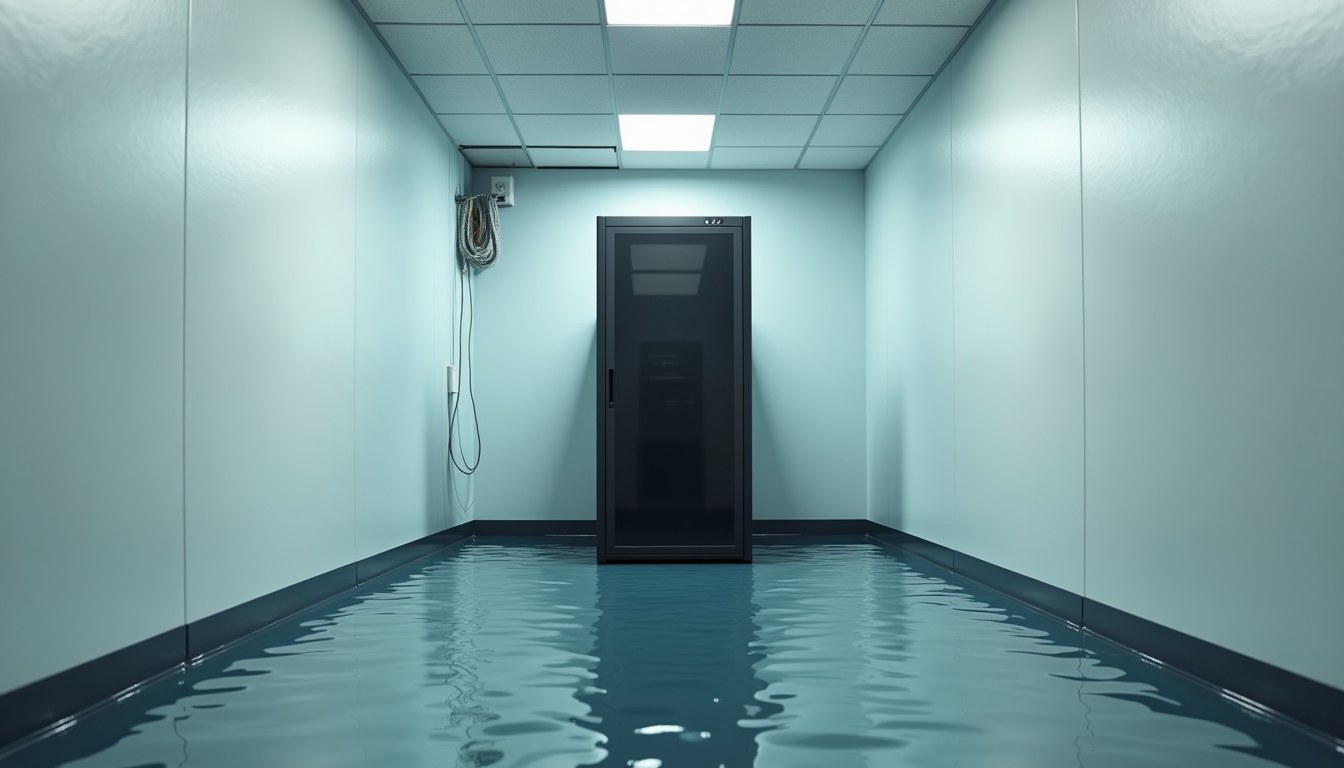
Without warning, a client’s prized fish tanks flooded the second floor of the building. Water worked its way down through the floor and into the server room below, right onto the equipment the business ran on. Nobody had a warning. There was no leak that had been building for weeks, no maintenance ticket that got ignored. One day the tanks were fine, and the next the server room had standing water in it.
This is the kind of disaster recovery scenario that rarely makes it into a planning document. Most businesses that think about backup and disaster recovery picture a ransomware attack, a failed hard drive, or a fire. Very few picture an aquarium two floors up. That is exactly why disaster recovery planning has to cover “something breaks and floods the server room,” not a specific list of feared events.
The Approach

The client already had off-site backup with real disaster recovery capabilities in place before the flood ever happened. That is the detail that made everything afterward straightforward instead of catastrophic: the plan did not have to be built during the emergency, it had already been tested and was sitting ready.
When the water reached the server room, the response was not a scramble. It was executing a plan that already existed: fail over to the cloud-hosted environment, keep the business running from there, and start the physical recovery of the damaged on-site hardware in parallel, with no pressure to rush it because operations were not waiting on it.
The Result

Immediately after the flood, the client switched to operating out of the cloud while the on-site servers were repaired and restored. No data was lost. The client continued operations with less than 10 minutes of downtime, total, for an event that could easily have meant days of lost productivity and a real risk of permanent data loss if it had hit a business running on-site backups alone, or no tested backup plan at all.
Why This Matters For Your Business
The lesson here is not “watch out for fish tanks.” It is that disaster recovery only works if it is tested and ready before something goes wrong, because you rarely get to pick your disaster. Water damage, a bad UPS, an HVAC failure in the server room, a burst pipe two floors up: none of these show up on a typical risk checklist, and none of them care whether your backup plan is actually current.
If your business is running on backups nobody has tested recently, or a “we think we could recover” plan instead of a proven one, that gap usually stays invisible right up until the day it matters most. See our Backups & Disaster Recovery page for how we build and test recovery plans before you ever need them, or get a free IT assessment to see where your own plan actually stands today.
Smooth Sailing Through Flood
Without warning, prized fish tanks overflowed and flooded the server room. Thankfully, prior preparation turned this flood into an incovenient mess, but not complete disaster.
The Problem
Without warning, a client’s prized fish tanks flooded the second floor of the building. Water worked its way down through the floor and into the server room below, right onto the equipment the business ran on. Nobody had a warning. There was no leak that had been building for weeks, no maintenance ticket that got ignored. One day the tanks were fine, and the next the server room had standing water in it.
This is the kind of disaster recovery scenario that rarely makes it into a planning document. Most businesses that think about backup and disaster recovery picture a ransomware attack, a failed hard drive, or a fire. Very few picture an aquarium two floors up. That is exactly why disaster recovery planning has to cover “something breaks and floods the server room,” not a specific list of feared events.
The Approach
The client already had off-site backup with real disaster recovery capabilities in place before the flood ever happened. That is the detail that made everything afterward straightforward instead of catastrophic: the plan did not have to be built during the emergency, it had already been tested and was sitting ready.
When the water reached the server room, the response was not a scramble. It was executing a plan that already existed: fail over to the cloud-hosted environment, keep the business running from there, and start the physical recovery of the damaged on-site hardware in parallel, with no pressure to rush it because operations were not waiting on it.
The Result
Immediately after the flood, the client switched to operating out of the cloud while the on-site servers were repaired and restored. No data was lost. The client continued operations with less than 10 minutes of downtime, total, for an event that could easily have meant days of lost productivity and a real risk of permanent data loss if it had hit a business running on-site backups alone, or no tested backup plan at all.
Why This Matters For Your Business
The lesson here is not “watch out for fish tanks.” It is that disaster recovery only works if it is tested and ready before something goes wrong, because you rarely get to pick your disaster. Water damage, a bad UPS, an HVAC failure in the server room, a burst pipe two floors up: none of these show up on a typical risk checklist, and none of them care whether your backup plan is actually current.
If your business is running on backups nobody has tested recently, or a “we think we could recover” plan instead of a proven one, that gap usually stays invisible right up until the day it matters most. See our Backups & Disaster Recovery page for how we build and test recovery plans before you ever need them, or get a free IT assessment to see where your own plan actually stands today.